We’re taking our meetings online.
We are using a range of online video options so please get in touch to have a chat.

Need expert advice?
Why not give us a call and see how we can help you with your project?
249-315-0775
We are using a range of online video options so please get in touch to have a chat.
Why not give us a call and see how we can help you with your project?
249-315-0775Jargon-free, experience-backed insights to guide your digital decisions.

Pete Fairburn

I was looking for a blazer recently. Not just any blazer.
Something I could wear for podcasts and speaking. A tricky combination of smart, but not too smart. Something somewhat out of the ordinary, with little details that made it stand out, but without be overtly ostentatious. And it needed to be a good fit for my build. And all of that in price range that I was happy with.
Normally, I would have browsed for weeks. A tab here, a saved item there, gradually narrowing it down.
Instead, I described exactly what I wanted into ChatGPT.
It gave me an answer.
Not ten options. Not a category page. An answer. Exactly what I wanted. Ready to buy.
So I bought it. I didn’t even check the reviews or the delivery information (it came the next day).
That’s a fundamental shift.
What used to take time, comparison and a bit of patience is now collapsing into a single moment. A singularity of time where the right option is presented, trusted, and chosen.
That behaviour isn’t limited to blazers. And it isn’t limited to B2C.
It’s already happening in B2B.
Business owners and procurement teams are time poor. They don’t want more options. They want the right option. Something that fits their situation, solves their problem or pain properly, and feels like a safe decision.
As Search Engine Land recently discussed, decision journeys are compressing. What used to be a journey and process is becoming a moment. The question is no longer just “how do we get found?” but “are we the answer when the question is asked?”
That’s a different challenge. And most businesses are not set up for it.
The instinctive response is to do more.
More is always better! Right?
But if the underlying thinking is unclear, all you are doing is increasing the volume of noise, not signal.
AI doesn’t ignore that. It averages it.
And when it does, you end up looking like everything else. Safe. General. Interchangeable.
Present, but with no reason to be chosen.
Before you worry about visibility in an AI-shaped search journey, you need to be clear about what you want to be visible for.
That means answering questions many teams skip, don’t know to ask, or answer too loosely to be useful.
Questions like:
If you can’t answer those clearly, no amount of optimisation will position you as the right answer.
The site becomes the place where unresolved thinking gets published…
Different services aimed at different audiences, all competing for attention. Messaging that tries to appeal to everyone and ends up convincing no one. Content that reflects what the business used to do, not what it needs to do next. A stream of meandering consciousness, representing different periods in the organisation’s history and thinking.
It might look right. And it might even perform, to a degree…
But it won’t consistently bring in the work you actually want and you will be leaving money, be that good quality enquiries or transactions, on the table.
We realised this over 10 years ago, long before the rise of AI. And so we developed a framework we call Discovery to address that.
This framework isn’t simply to gather information. We use it to make decisions…
And then we structure everything around that.
The site architecture. The content. The user journeys. The marketing activity that feeds into it.
All aligned to a clear commercial outcome.
We’ve worked this way for over 10 years because it produces better results for our clients. For us, that’s nothing new.
But what is new is the cost of not doing it.
In an AI-driven journey, your business is being interpreted and summarised.
If your signals are inconsistent, outdated, or aimed at the wrong audience, that is exactly what gets reflected back.
You might still be there.
Just not as the right answer. Not the shining, clear, beacon that screams to your perfect customer: “we are exactly what you need”. Someone else is enjoying that.
Most websites are built to look right.
But the better ones are built to say the right thing.
The ones that perform are built on decisions made before the first page is designed.
If you’re about to invest in a new site or rethink your digital marketing, it’s worth asking a simple question:
Are we clear on what this needs to achieve, and for whom?
Or are we about to produce a more polished version of the same problem?
If you’re investing in a new website or digital marketing, ensure it’s built around the right audience, the right message, and clear commercial goals.
How is AI changing how customers make decisions?
AI tools are compressing what used to be a longer research and comparison process into a single moment. Instead of reviewing multiple options, people are increasingly presented with a small number of recommendations, or even a single answer, and making a decision from that.
Why does website clarity matter more in an AI-driven search journey?
AI systems interpret and summarise your content. If your messaging is inconsistent or too broad, that gets averaged into something generic. Clear positioning helps ensure you are recognised as a strong fit for a specific need, rather than being grouped in with everyone else.
Can AI optimisation alone improve my website’s performance?
No. Optimisation can improve visibility, but it cannot fix unclear positioning or messaging. If your website does not clearly communicate who it is for and what it helps them achieve, increasing traffic will not necessarily lead to better enquiries or sales.
What is meant by ‘being the answer’ in AI search?
It means your business is identified as the most relevant option for a specific situation or need. In an AI-driven journey, the goal is not just to appear in results, but to be presented as the best fit when the question is asked.
Why do many website projects fail to deliver results?
Often because key decisions are not made upfront. Teams move into design and development without clearly defining their audience, their commercial goals, or what the website needs to achieve. The result is a site that looks good but does not consistently generate the right enquiries.
What is a discovery process in web projects?
Discovery is a structured phase where you define your audiences, understand their needs, assess your competitors, and align on clear commercial goals. It ensures that your website and digital marketing are built on solid decisions rather than assumptions.
How does discovery improve website performance?
By focusing the website on the right audience and their specific needs. This leads to clearer messaging, more relevant user journeys, and ultimately better quality enquiries and conversions.
Do I need discovery if I already have a website?
Yes, if your current site is not delivering the results you want. Discovery helps identify whether the issue is with messaging, structure, audience focus, or something else, before making changes.
How does AI interpret website content?
AI looks at patterns across your content, including how you describe your services, your audience, and your expertise. It uses that to form a summary of what your business does and who it is relevant for. Consistency and clarity make that interpretation stronger.
What should I define before building a new website?
You should be clear on who you want to reach, what matters to them, what problems you solve, and what the website needs to achieve commercially. Without that, design and development decisions are likely to miss the mark.
Commercial Director
Pete is a Co-founder and Director at morphsites. He helps businesses turn complex digital challenges into clear, achievable plans. He’s especially focused on making sure websites and marketing efforts actually support the goals of the business, and don’t just look good on paper.
 You can't ask an agency for outcomes while dictating the process
 PPC Frustrations Part 1 - Why Google Ads often fail before the first ad even runs
 PPC Frustrations Part 2 - Why do Google Ads get clicks but still fail to convert?
 PPC Frustrations Part 3 - Why don’t Google Ads leads turn into customers?
 Finding the extraordinary in the ordinary
 Before you build, find out if you should
 Are you solving the right problem?
 More signal, less noise
 Is AI changing how we should plan websites and marketing strategies?
 Planning a Website or Digital Project? Here’s What to Do First.
Not sure where to start with your digital project?
We’ve guided businesses through complex builds, integrations, and marketing strategies. We’re here to listen, advise, and support, whenever you’re ready.
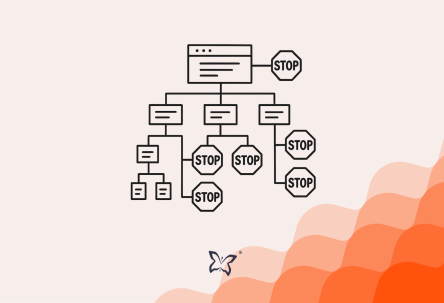
Before investing in a new website or digital marketing, make sure you’re building the right thing. This article explains the value of strategy, UX, and technical planning through the lens of a well-known brand that skipped discovery and paid the price.
By Pete Fairburn

Before you jump into designing, coding, or marketing, ask this: have you defined the problem clearly enough? Too many projects start with a solution in search of a problem. This piece explores why defining the real issue first can transform the outcome of any digital project.
By Pete Fairburn
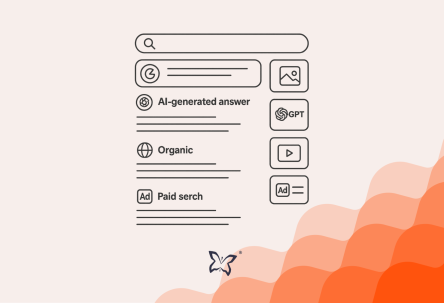
AI has changed how people search...and how your website needs to respond. This article explores why discovery, clearer content, and strategic paid search are becoming essential in a world of AI-generated answers.

By Dan Drummond
© 2026 morphsites Ltd. All rights reserved E&OE. Registered in England no. 07116238. The ‘morphsites’ wordmark and butterfly device are registered trademarks of morphsites Ltd.