We’re taking our meetings online.
We are using a range of online video options so please get in touch to have a chat.

Need expert advice?
Why not give us a call and see how we can help you with your project?
249-315-0775
We are using a range of online video options so please get in touch to have a chat.
Why not give us a call and see how we can help you with your project?
249-315-0775Jargon-free, experience-backed insights to guide your digital decisions.

Dan Drummond

How do you decide what questions and content to put on your website?
The natural and immediate instinct is often to ask: What do we need to tell people?
After all, whether we are a business owner or in a marketing function, we know our business better than anyone, right? We have the passion, the knowledge, the experience. Surely we can determine what our customers need to hear?
But a better question to ask ourselves is this: What do our ideal customers need to know before they can decide whether we are right for them?
Asking that quesiton changes the role of your website. Instead of being organised around the information you and your business wants to publish, it starts addressing the questions, concerns and problems that shape a customer's decision.
FAQs can be a useful part of this. But the opportunity extends beyond creating a list of questions and answers. The same customer insight can inform sitewide navigation, service pages, articles, case studies and wider content strategies. It can help you attract better prospects, build trust and make it easier for the right people to take the next step.
It can also help the wrong people recognise that you are not a suitable fit before they take up your team's time.
A useful FAQ answers a real question asked by the kind of customer you want to work with.
That may sound obvious, but many FAQ pages contain questions that the business wishes customers would ask. They explain convenient features or repeat sales messages without addressing the concerns that are actually holding people back.
The most valuable questions tend to be practical:
Clear answers help potential customers understand what you offer and decide whether it fits their needs. They remove avoidable uncertainty without trying to replace every useful sales conversation.
That distinction is improtant. The objective is not to stop people calling. It is to make the calls you receive more worthwhile.
Every enquiry has a cost beyond any expense on acquisition from a paid channel or campaign. It's one of the most important, but often missed:
Someone has to answer the phone, respond to the email or arrange the meeting. If the prospect could never become a suitable customer, that time could have been spent helping someone who can.
Your website should therefore do more than generate the greatest possible number of leads. It should help qualify them.
Some answers give suitable prospects the confidence to get in touch. Others allow people to recognise that the service is outside their budget, unavailable in their area or unsuitable for what they need.
This isn't a lost lead. It's a lead that has correctly disqualified itself.
At the same time, suitable customers arrive better informed. Instead of beginning a call with basic questions, they can discuss their situation, confirm the details and move towards a decision.
The simplest place to start is with the people who speak to customers every day.
Sales teams, account managers, customer service staff and reception teams usually know which questions come up repeatedly. Ask them:
It is also worth asking which problems customers are trying to solve. People may not describe those problems using the same language as your business, and that difference can reveal weaknesses in your website content.
Customer interviews add another perspective. They allow you to explore what someone needed, what initially concerned them and which information helped them choose you.
These methods are valuable, but they have limitations. Staff recollections can be selective, while interviews usually cover a relatively small number of customers. Important details can remain hidden beneath the surface.
Businesses receiving a significant number of enquiries already possess a much larger source of customer insight: their phone calls and emails.
The challenge is turning those individual conversations into useful evidence.
This is one of the ways we use morphBI.
morphBI is a business intelligence and analytics platform that - amongst other things - can capture and analyse customer calls. It records what prospective customers are asking about, the intent behind their enquiries and the subjects that recur across multiple conversations. It can also determine which conversations led to a sale.
This gives us a clearer view of questions such as:
Call recording and analysis must, of course, be handled with the appropriate privacy notices, lawful basis, retention policies and access controls.
We used this approach with a client in the leisure industry whose website was already performing well and generating a high volume of leads.
An analysis of their calls revealed that prospective customers were repeatedly asking several fundamental questions. The website was bringing people in, but it was not giving them all the information they needed before making contact.
Those calls were not evidence that the website had failed. They were evidence that it could work harder.
By identifying the recurring subjects, we found gaps in the website's main content and FAQs. Addressing those gaps helped improve the quality of the enquiries the business received and reduced the time it took suitable prospects to progress.
The team could spend less time repeating basic information and more time having useful conversations with people who understood the offer.
Not every recurring question should be answered with a short entry on an FAQ page.
Some questions need a sentence. Others reveal a larger subject that deserves its own article, guide, service page or case study.
For example:
This is where customer questions start to shape a wider content strategy.
Instead of choosing article subjects because the business wants to publish something, you can develop content around demonstrated customer needs. That content is more likely to be useful because it begins with a problem, concern or decision that already exists.
Businesses naturally see themselves through their own structure. The website navigation can often follow departments and teams. Each team describes its own services. Information is divided according to internal responsibilities.
Customers do not usually think that way.
They arrive with a task to complete, a problem to solve or a question they need answered. They should not have to understand your organisational structure to find the right information.
We recently received a website brief from an organisation that had recognised this problem. Its existing site was too department-centric. The navigation and content reflected internal silos rather than giving users a coherent route through the organisation's services.
Recurring customer questions provide a practical basis for changing that structure. When you understand what different users are trying to achieve, you can organise information around their needs rather than your departments.
Real customer questions can also strengthen your search strategy.
The words customers use on calls are often different from the terminology used inside the business. Reflecting that language in your website can help you develop more relevant topics for organic search.
It is also increasingly important for searches conducted through AI tools and large language models. Clear pages that directly answer specific questions give search systems useful material to interpret and reference.
This doesn't mean turning every call transcript into an article or filling pages with slightly different versions of the same question. That would dilute the point and power of this information. The aim is to identify meaningful patterns, understand the intent behind them and create the clearest useful response.
The strongest website content should never begin with a blank page or empty content plan. Let's face it, that's tough going. It's much better to begin by listening.
Your sales and customer service teams can tell you a great deal. Customer interviews can take you further. But when you are handling a high volume of enquiries, analysing real conversations can reveal patterns that individual recollections and small research samples miss.
morphBI helps us connect those patterns with wider lead and sales data. We can see not only what people are asking, but how enquiries progress and which marketing channels contribute to completed sales.
That evidence helps us decide:
The result is not simply an FAQ page with more questions on it. It is a website shaped around what suitable customers actually need to know.
We can help you identify what suitable customers need to know and use those insights to improve your website, content and lead quality.
How do I decide what content my new website needs?
Start with what your ideal customers need to understand, not what each department wants to publish. Customer questions, sales conversations, search behaviour and existing website data can all reveal useful subjects and content gaps.
Should we include FAQs on our new website?
Yes, if they answer genuine questions that affect a customer's decision. Some answers may belong on an FAQ page, while others are better placed within service pages, articles or guides.
How should a new website be structured?
The structure should help users complete their tasks and find answers easily. Internal departments may influence the content, but they should not dictate the entire user journey.
Can our existing enquiries help us plan the website?
Yes. Phone calls, emails and conversations with your sales and customer service teams can show what customers misunderstand, what concerns them and what they need to know before taking the next step.
Head of Digital Strategy
Dan leads our digital marketing team at morphsites. With a sharp eye on SEO, paid search, and ROI tracking, he’s always looking for ways to help businesses make smarter use of their marketing spend...and keep pace with a fast-changing digital landscape.
 You can't ask an agency for outcomes while dictating the process
 PPC Frustrations Part 1 - Why Google Ads often fail before the first ad even runs
 PPC Frustrations Part 2 - Why do Google Ads get clicks but still fail to convert?
 PPC Frustrations Part 3 - Why don’t Google Ads leads turn into customers?
 Finding the extraordinary in the ordinary
 Before you build, find out if you should
 Are you solving the right problem?
 More signal, less noise
 Is AI changing how we should plan websites and marketing strategies?
 Planning a Website or Digital Project? Here’s What to Do First.
Not sure where to start with your digital project?
We’ve guided businesses through complex builds, integrations, and marketing strategies. We’re here to listen, advise, and support, whenever you’re ready.

The phones were ringing constantly at a legal firm we worked with, yet the business wasn’t growing the way it should. Most of those enquiries were never going to become clients, and while the team dealt with time wasters, the real opportunities were slipping away.
By Dan Drummond

Before you jump into designing, coding, or marketing, ask this: have you defined the problem clearly enough? Too many projects start with a solution in search of a problem. This piece explores why defining the real issue first can transform the outcome of any digital project.

By Pete Fairburn
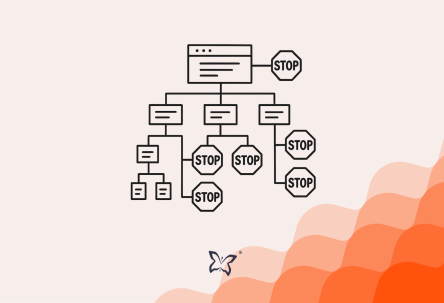
Before investing in a new website or digital marketing, make sure you’re building the right thing. This article explains the value of strategy, UX, and technical planning through the lens of a well-known brand that skipped discovery and paid the price.
By Pete Fairburn
© 2026 morphsites Ltd. All rights reserved E&OE. Registered in England no. 07116238. The ‘morphsites’ wordmark and butterfly device are registered trademarks of morphsites Ltd.