We’re taking our meetings online.
We are using a range of online video options so please get in touch to have a chat.

Need expert advice?
Why not give us a call and see how we can help you with your project?
249-315-0775
We are using a range of online video options so please get in touch to have a chat.
Why not give us a call and see how we can help you with your project?
249-315-0775Jargon-free, experience-backed insights to guide your digital decisions.

Pete Fairburn

Businesses are under more pressure than ever to justify every dollar they spend on marketing. That has led to more conversations around performance-based marketing, outcome-based fees and contingency arrangements. It's a trend we understand and, in many situations, welcome.
If an agency is genuinely confident in its ability to improve commercial outcomes, why shouldn't it be prepared to share some of the risk, as well as the reward, for a successful outcome?
But that can only happen when accountability and control rest with the agency.
Increasingly, we're seeing businesses ask agencies to guarantee outcomes while simultaneously prescribing the method they expect the agency to follow. The conversation starts with a predetermined solution rather than an exploration of the problem. At that point, the dynamic of the relationship changes. The agency is no longer being asked to diagnose. It's being asked to execute someone else's diagnosis.
Imagine booking an appointment with your GP and saying, "I've already worked out what's wrong with me. I need these tablets."
Most of us wouldn't do that. We'd explain the symptoms, answer some questions and rely on the doctor's experience to determine both the diagnosis and the treatment.
Yet businesses do the commercial equivalent surprisingly often.
The result is that agencies are expected to take responsibility for outcomes while being denied the opportunity to follow the process that gives them the best chance of achieving them.
To illustrate, we were recently approached by a business that had experienced a noticeable decline in enquiries.
In an attempt to address this commercial challenge, they had already reached a conclusion about the cause. In their assessment, the problem was SEO. And so what they wanted from us was an SEO strategy, with the intention that this could then be executed by another provider.
They also wanted clear measures of success. If the strategy improved enquiries, it had worked. If it didn't, it hadn't. That seemed entirely reasonable.
On the face of it, the brief was straightforward.
What became apparent during our early conversations, however, was that the business had already decided on the treatment without asking anyone to confirm or even prove the diagnosis.
So we challenged this, proposing that we needed to run workshops with key stakeholders in the business before verifying the given diagnosis and corresponding treatment.
This presented a problem.
Within the previous 18 months, the business had completed a brand strategy with another agency, including stakeholder workshops and the development of an ideal customer profile. The resulting visual identity had also been implemented on their website. From their perspective, that work had already been done, so they questioned why we would need to revisit it before producing an SEO strategy.
That's an understandable question.
After all, if you've already invested time and money in strategy workshops, why would you want to pay for more strategy workshops?
The difficulty was that we weren't being asked to build on our own understanding of the business. We were being asked to produce a strategic plan and recommendations based largely on assumptions others had reached, for a different (albeit similar) purpose, without first validating whether those assumptions still reflected the commercial problem the business was trying to solve.
That distinction mattered.
While the requested deliverable was an SEO strategy, the actual business objective wasn't better SEO.
It was more relevant, commercially valuable enquiries.
Those are not necessarily the same thing.
The business believed it needed an SEO strategy because enquiries had declined. But a decline in enquiries is a symptom, not a diagnosis.
The same is true in medicine.
A persistent cough may be caused by a simple infection, an allergy, asthma or something far more serious. Treating the cough without understanding its cause might relieve the symptoms for a while, but it doesn't necessarily solve the underlying problem.
Businesses are no different.
Lower organic search rankings are a symptom. Fewer enquiries are a symptom. Poor quality leads are a symptom. Declining conversion rates are a symptom. Even increasing website traffic can be misleading if the visitors arriving aren't the people you're trying to reach.
The challenge is understanding why those symptoms exist before deciding how to respond.
Could SEO have been part of the answer? Almost certainly.
But it could just as easily have been a positioning issue. Or messaging. Or information architecture. Or content that answered the wrong questions. Or a website that no longer reflected how different decision-makers evaluated suppliers.
Even during our initial conversations, it became clear there was unlikely to be a single individual involved in the buying process. Different stakeholders had different priorities, concerns and measures of success. A procurement team might focus on cost and risk. A technical stakeholder might evaluate capability and compliance. A senior decision-maker might be looking at long-term value or strategic fit. Marketing and product teams other imperatives.
Each of those audiences needs different questions answering before they feel confident enough to make a purchasing decision.
That is why we couldn't simply accept the diagnosis and write an SEO strategy.
Before recommending any treatment, we first needed confidence that we understood the problem we were actually trying to solve.
Hence why stakeholder workshops were needed before producing the strategy.
However, that process added time and cost to the project and required further involvement from senior people in the business. The client's concern was understandable. They had already been through workshops as part of the earlier brand strategy and did not see the value in repeating what appeared to be the same exercise.
But we were not proposing repetition for the sake of it.
We needed to understand the commercial objective, the people involved in the buying journey, the questions they needed answering and the reasons an enquiry might be won or lost. We also needed to test whether the assumptions inherited from the earlier strategy still held true and identify the gaps, particularly given that enquiries had declined since the revised visual identity had been introduced on the website.
That did not mean the previous strategy was necessarily wrong. It meant we could not responsibly treat its conclusions as proven facts without seeing the evidence behind them or validating them against the current commercial challenge.
The single ideal customer profile was one example.
A business may have a clearly defined type of company it wants to work with, but that does not mean there is only one person involved in the buying decision. In B2B sales, several people may influence the outcome, each with different priorities, concerns and reasons for choosing one supplier over another.
A lead generation strategy built around only one of those people risks overlooking the needs of everyone else involved in the decision.
The workshops were therefore not an additional layer placed on top of the work. They were the means by which we would reduce uncertainty before deciding what the work should be.
Without that groundwork, we could still have produced an SEO strategy. We could have completed technical audits, identified keyword opportunities and made recommendations about content and site structure.
What we could not have done was claim with confidence that those recommendations addressed the real cause of the decline in commercially valuable enquiries.
And if we could not establish that, it would have been difficult to accept responsibility for the outcome.
In the end, we decided not to pursue the project.
Not because we doubted our ability to produce an SEO strategy.
And not because we disagreed that search visibility could form part of the solution.
We stepped away because we couldn't honestly accept responsibility for an outcome without first being allowed to follow the process we believed gave us the best chance of achieving it.
The business was comparing our proposal with others that were less expensive. From what we understood, those proposals accepted the brief largely as it had been presented and moved quickly into technical audits and SEO recommendations.
There will always be agencies prepared to work that way.
Equally, there will always be businesses who prefer that approach.
Our concern wasn't that it was cheaper.
It was that the cost saving came from removing the investigation rather than improving the outcome.
If your objective is simply to produce a strategy document, there are faster and less expensive ways of doing it than ever before. Today, AI can generate audits, recommendations and reports in minutes.
But producing a document has never been the difficult part.
The difficult part is knowing whether you're solving the right problem.
That is where experience still matters.
Not because experienced people write longer reports or ask more questions, but because they know when not to accept assumptions at face value. They know that the quality of the diagnosis will almost always determine the quality of the outcome.
Walking away from work is never an easy commercial decision.
But accepting responsibility for results while compromising the very process designed to achieve them would have been harder to justify.
Performance-based marketing, outcome-based fees and contingency arrangements will almost certainly become more common over the coming years.
In many cases, that's a positive development. Agencies should be prepared to stand behind their work, share risk where appropriate and be rewarded when they deliver meaningful commercial outcomes.
But accountability only works when responsibility and authority sit together.
If you ask an agency to own the outcome, you also have to trust it to challenge assumptions, investigate the problem and recommend the approach it believes will give you the greatest chance of success. That doesn't mean accepting every recommendation without question. It means recognising that expertise is more than execution. It's knowing what questions to ask before deciding what needs to be done.
The cheapest proposal is often the one that asks the fewest questions.
Sometimes that's exactly what's needed.
But when the stakes are high and the outcome matters, the questions are often where the value lies.
So, if you're asking an agency to put some of its fee at risk, ask yourself one question first.
Are you also prepared to trust the process that gives that agency the best chance of succeeding?
Because if the answer is no, it may be unfair to ask it to guarantee the result.
If your enquiries have slowed, your website isn’t converting, or you’re questioning your digital strategy, let’s start by understanding the problem before determining the solution.
Why shouldn’t an agency guarantee results if it’s confident?
A confident agency can absolutely stand behind its work, but meaningful guarantees depend on having sufficient control over the strategy and implementation. If key decisions are constrained or recommendations aren’t followed, it’s difficult to fairly attribute the outcome to the agency.
What is outcome-based marketing?
Outcome-based marketing is an approach where success is measured against agreed commercial objectives, such as qualified enquiries, revenue or lead quality, rather than simply completing marketing activities. In some cases, agency fees may also be linked to those outcomes.
What is performance-based marketing?
Performance-based marketing is a commercial model where some or all of an agency’s remuneration depends on achieving agreed results. For this to work fairly, both the agency and client need clearly defined responsibilities and measurable success criteria.
What are contingency-based agency fees?
Contingency-based fees are arrangements where an agency shares both the commercial risk and reward of a project. If agreed outcomes are achieved, the agency shares in the success. If they aren’t, the agency may earn less than under a traditional fixed-fee model.
Why do agencies recommend discovery workshops?
Discovery workshops help agencies understand commercial objectives, customer behaviour, buying journeys and business priorities before recommending solutions. The aim is to diagnose the underlying problem rather than simply responding to symptoms.
Can SEO improve website enquiries on its own?
Sometimes, but not always. SEO can increase visibility and attract visitors, but enquiries also depend on factors such as positioning, messaging, user experience, website navigation, trust signals and how well your content answers buyers’ questions.
What is the difference between a symptom and a business problem?
A symptom is something you observe, such as declining enquiries, lower search rankings or falling conversion rates. The underlying business problem is the reason those symptoms exist. Effective strategy focuses on identifying the cause before deciding on the solution.
Should you tell an agency what strategy to follow?
It’s perfectly reasonable to share your ideas and objectives. However, if you’ve engaged an agency because of its expertise and results with others, it should have the opportunity to test assumptions and recommend the approach it believes will deliver the best commercial outcome.
Why do some agencies walk away from projects?
Experienced agencies will sometimes decline projects if they believe the proposed approach significantly reduces the likelihood of success. Walking away can be preferable to accepting responsibility for results they don’t believe they can fairly influence.
Is a technical SEO audit enough to improve business performance?
Not necessarily. A technical SEO audit can identify issues affecting search visibility, but improved commercial performance often depends on a broader combination of strategy, content, user experience, positioning, conversion optimisation and customer understanding.
Commercial Director
Pete is a Co-founder and Director at morphsites. He helps businesses turn complex digital challenges into clear, achievable plans. He’s especially focused on making sure websites and marketing efforts actually support the goals of the business, and don’t just look good on paper.
 Who are you trusting with your website? 10 questions you should ask.
 You can't ask an agency for outcomes while dictating the process
 PPC Frustrations Part 1 - Why Google Ads often fail before the first ad even runs
 PPC Frustrations Part 2 - Why do Google Ads get clicks but still fail to convert?
 PPC Frustrations Part 3 - Why don’t Google Ads leads turn into customers?
 Finding the extraordinary in the ordinary
 Before you build, find out if you should
 Are you solving the right problem?
 More signal, less noise
 Is AI changing how we should plan websites and marketing strategies?
 Planning a Website or Digital Project? Here’s What to Do First.
Not sure where to start with your digital project?
We’ve guided businesses through complex builds, integrations, and marketing strategies. We’re here to listen, advise, and support, whenever you’re ready.

Before you jump into designing, coding, or marketing, ask this: have you defined the problem clearly enough? Too many projects start with a solution in search of a problem. This piece explores why defining the real issue first can transform the outcome of any digital project.
By Pete Fairburn

In a world where digital interference is constant, the hardest task for any business is being heard clearly by the right people. Search results, social feeds and AI-generated content all add to the static. What cuts through is a strong, recognisable signal: a message that your audience can instantly tune into and trust.
By Pete Fairburn
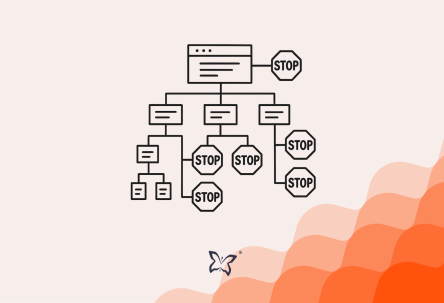
Before investing in a new website or digital marketing, make sure you’re building the right thing. This article explains the value of strategy, UX, and technical planning through the lens of a well-known brand that skipped discovery and paid the price.
By Pete Fairburn
© 2026 morphsites Ltd. All rights reserved E&OE. Registered in England no. 07116238. The ‘morphsites’ wordmark and butterfly device are registered trademarks of morphsites Ltd.